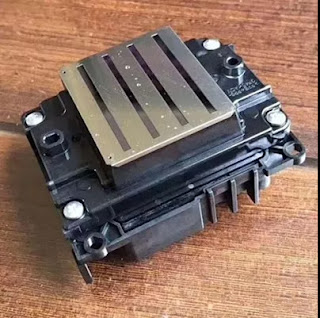
Hi, Nice to see you again, my dear friends! As we know,everyone wants a
dye-sublimation printer that performs every day and is reliable.
By performing basic preventative maintenance routines on your wide-format
dye-sub printers, you can both prolong the life of your printer investment and
ensure its day to day quality performance.
Most owners/operators of wide-format dye-sub inkjet printers can perform this
routine housekeeping on their own. Be sure to check with your vendor to see what
preventative maintenance training resources are available to you when you buy
the printer. These simple preventative steps will save you big bucks on
expensive break-fix repairs in the long run.
How to prolong the life of your inkjet printer? Please Following below:
Keep your dye-sub printer in a clean area, free from lint, dust and any dirt.
Cover it when not in use, and vacuum the inside of the print cabinet area gently
as often as needed.
Exercise your inkjet printer daily. Even a simple nozzle check will keep it
in shape. It is cheaper to print a basic color chart, test pattern, or any
nozzle pattern than fixing a clogged head.
Dye-sublimation inkjet printers operate best in a humidity of 35–45 percent.
This is why they are usually located in their own clean, humidified room to
maintain consistent conditions. Along with a room humidifier, you can place a
humidor sponge inside your printer at rest.
Periodic cleaning and inspection of the overall ink delivery system is a
must. Check these components frequently, as they are what keep your printer in
top-operating condition. More information on cleaning the wipers, capping
station, and the flushing system can be found in more detail here.
Training is one the most important aspects of buying a wide-format
dye-sublimation printer from each vendor and your local reseller or systems
integrator. They should be available to assist you with proper installation, as
well as any basic procedures and training resources to enable you to become
self-sufficient in the day to day operation of dye-sub printers.
Ultimately, it is your responsibility as the owner of any digital printing or
finishing equipment to learn how to best operate and maintain that equipment and
keep it in top condition. If you don’t know how to best run and maintain the
equipment, you are setting yourself up for a tough time keeping it
operational.
Dye-sub printer manufacturers will have detailed instructions and published
procedures on preventative maintenance and technical repair guides. There are
now a lot of good YouTube videos, web blogs, and other public forums on how to
best maintain digital printing equipment. A lot of the simple components, such
as a print heads and wiper blades are available on the open market and can be
simple to replace on most modern wide-format dye sub inkjet printers.
In concluding:
By properly maintaining your large-format sublimation printer and learning how to
protect your investment, you can gain many years of good use, produce
high-quality products, and reduce your exposure to costly repairs. If you have
any other needs or questions welcome to contact us at any time. We will provide
you the best quality product and service. Hope my article can be useful to you.
Thank you for your reading.
More Information:
Nanjing Feiyue paper Industrial Co.,ltd
www.feiyuepaper.com
Email: sales@feiyuepaper.com
jenny@feiyuepaper.com
Whatsapp: +8618755150383
2018年7月18日星期三
2018年5月30日星期三
Comparing with Traditional Inkjet Printers, What is the Advantages of Dye-sublimation Printer?
Hello, my friends, nice to see you again! Today's topic is about
dye-sublimation printer. Comparing with traditional inkjet printers, do you know
the advantages of dye-sublimation printer? If you don't know, it's doesn't
matter! Now read the following and I will share you more.
Advantage of dye-sublimation printers
Traditionally, the advantage of dye-sublimation printing has been the fact that it is a continuous-tone technology, where each dot can be any color. In contrast, inkjet printers can vary the location and size of ink droplets, a process called dithering, but each drop of ink is limited to the colors of the inks installed. Consequently, a dye-sublimation printer produces true continuous tones appearing much like a chemical photograph. An inkjet print is composed of droplets of ink layered and scattered to simulate continuous tones, but under magnification the individual droplets can be seen. In the early days of inkjet printing, the large droplets and low resolution made inkjet prints significantly inferior to dye-sublimation, but some of today's inkjets produce extremely high quality prints using microscopic droplets and supplementary ink colors, producing superior color fidelity to dye-sublimation.
Dye sublimation offers some advantages over inkjet printing. For one, the
prints are dry and ready to handle as soon as they exit the printer. Since the
thermal head doesn't have to sweep back and forth over the print media, there
are fewer moving parts that can break down. The whole printing cycle is
extremely clean as there are no liquid inks to clean up. These factors make
dye-sublimation generally a more reliable technology over inkjet printing.
Drawbacks of large format sublimation printers
Dye-sublimation printers have some drawbacks compared to inkjet printers. Each of the colored panels of the ribbons, and the thermal head itself, must match the size of the media that is being printed on. Furthermore, only specially coated paper or specific plastics can accept the sublimated ink. This means that dye-sublimation printers cannot match the flexibility of inkjet printers in printing on a wide range of media.
The dyes diffuse a small amount before being absorbed by the paper. Consequently, prints are not razor-sharp. For photographs, this produces very natural prints, but for other uses (such as graphic design) this slight blurriness is a disadvantage.
The amount of wasted dye per page is also very high; most of the dye in the four panels may be wasted for a typical print. Once a panel has been used, even to just print a single dot, the remaining dye on that panel cannot be reused for another print without leaving a blank spot where the dye was used previously. Due to the single-roll design of most printers, four panels of colored dye must be used for every print, whether or not a panel is needed for the print. Printing in monochrome saves nothing, and the three unused color panels for that page cannot be recycled for a different single-color print. Inkjet printers can also suffer from 'dye wastage' as the ink cartridges are prone to drying up with low usage (without 'heavy use', the cartridge nozzles can become clogged with dried ink). Dye-sublimation media packs, (which contain both ribbon and paper), are rated for an exact number of prints which yields a fixed cost per print. This is in opposition to inkjet printers where inks are purchased by volume.
Also, dye-sublimation papers and ribbons are sensitive to skin oils, which
interfere with the dye's ability to sublimate from the ribbon to the paper. They
must also be free of dust particles, which can lead to small colored blobs
appearing on the prints. Most dye-sublimation printers have filters and/or
cleaning rollers to reduce the likelihood of this happening, and a speck of dust
can only affect one print as it becomes attached to the print during the
printing process. Finally, dye-sublimation printers fall short when producing
neutral and toned black-and-white prints with higher density levels and
virtually no metamerism or bronzing.
From the above, now you can know the advantages of dye-sublimation transfer printer. If you have any other needs or questions welcome to contact us at any time. We will provide you the best quality product and service. Hope my article can be useful to you. Thank you for your reading.
Nanjing Feiyue paper Industrial Co.,ltd
www.feiyuepaper.com
Email: sales@feiyuepaper.com
jenny@feiyuepaper.com
Whatsapp: +8618755150383
Traditionally, the advantage of dye-sublimation printing has been the fact that it is a continuous-tone technology, where each dot can be any color. In contrast, inkjet printers can vary the location and size of ink droplets, a process called dithering, but each drop of ink is limited to the colors of the inks installed. Consequently, a dye-sublimation printer produces true continuous tones appearing much like a chemical photograph. An inkjet print is composed of droplets of ink layered and scattered to simulate continuous tones, but under magnification the individual droplets can be seen. In the early days of inkjet printing, the large droplets and low resolution made inkjet prints significantly inferior to dye-sublimation, but some of today's inkjets produce extremely high quality prints using microscopic droplets and supplementary ink colors, producing superior color fidelity to dye-sublimation.
Drawbacks of large format sublimation printers
Dye-sublimation printers have some drawbacks compared to inkjet printers. Each of the colored panels of the ribbons, and the thermal head itself, must match the size of the media that is being printed on. Furthermore, only specially coated paper or specific plastics can accept the sublimated ink. This means that dye-sublimation printers cannot match the flexibility of inkjet printers in printing on a wide range of media.
The dyes diffuse a small amount before being absorbed by the paper. Consequently, prints are not razor-sharp. For photographs, this produces very natural prints, but for other uses (such as graphic design) this slight blurriness is a disadvantage.
The amount of wasted dye per page is also very high; most of the dye in the four panels may be wasted for a typical print. Once a panel has been used, even to just print a single dot, the remaining dye on that panel cannot be reused for another print without leaving a blank spot where the dye was used previously. Due to the single-roll design of most printers, four panels of colored dye must be used for every print, whether or not a panel is needed for the print. Printing in monochrome saves nothing, and the three unused color panels for that page cannot be recycled for a different single-color print. Inkjet printers can also suffer from 'dye wastage' as the ink cartridges are prone to drying up with low usage (without 'heavy use', the cartridge nozzles can become clogged with dried ink). Dye-sublimation media packs, (which contain both ribbon and paper), are rated for an exact number of prints which yields a fixed cost per print. This is in opposition to inkjet printers where inks are purchased by volume.
Notices of dye-sublimation printer
For environments that print confidential or secret documents, a
dye-sublimation printer is a potential security risk that must be handled
carefully. Due to the mechanism of printing, a perfect color-separated negative
image of the printed page is created on the supply roll color panels, and the
"waste roll" of dye panels can be unrolled to see everything that has been
printed with the printer. For such environments, the waste roll should be
shredded or incinerated onsite rather than simply being discarded in the trash.
Also, for home users, the waste roll from a photo printer can be similarly
recovered from the garbage and used to see everything that has been printed.
Since the supply roll is plastic, the lifespan of a used roll can be years or
decades long, permitting image recovery long after disposal.From the above, now you can know the advantages of dye-sublimation transfer printer. If you have any other needs or questions welcome to contact us at any time. We will provide you the best quality product and service. Hope my article can be useful to you. Thank you for your reading.
Nanjing Feiyue paper Industrial Co.,ltd
www.feiyuepaper.com
Email: sales@feiyuepaper.com
jenny@feiyuepaper.com
Whatsapp: +8618755150383
订阅:
博文 (Atom)
What is Epson 4720 Printhead? It Can Replace 5113 Print Nozzle?
Hello, nice to see you again, my dear friends. It will rainy in Nanjing, the sky is dack, wind is heavy. Now I will tell you the topic is a...
-
Hi~ nice to see you again, my dear friends. The National Day will coming! So from tomorrow to 7th October, I am in holiday. And today's...
-
Hi! Nice to see you again, my friends. Today, let's talk about how to clean epson nozzles . No matter if you use branded, compatible or ...
-
Hello, nice to see you again, my dear friends. It will rainy in Nanjing, the sky is dack, wind is heavy. Now I will tell you the topic is a...